
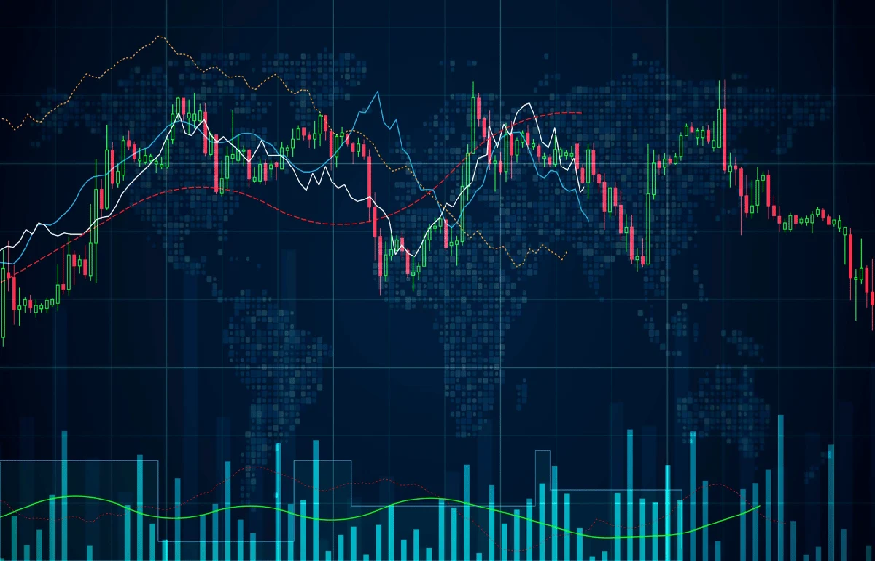
At a certain point in a trader’s development, the chart becomes a construction project. Each losing streak prompts another addition, another data point to filter out bad trades, another overlay for confirmation, another alert condition to catch what the existing setup has missed. The logic seems sound, but the outcome is nearly universal: a chart that has become harder to read rather than easier, as signals conflict with one another and the clarity the workspace once offered is slowly buried under layers of well-intentioned additions.
Subtraction is a more demanding analytical act than addition, and it arrives later in a trader‘s development, precisely because it requires a degree of confidence that early-stage traders have not yet developed. Removing an indicator means accepting that the data it provided is redundant, and that requires trusting what remains. A trader who has not yet developed a solid grasp of price structure will resist removing tools that feel like a safety net, even when those tools are adding noise rather than information. The willingness to subtract is itself a sign of analytical maturity.
Read More : Best Church Supplies For Sale For Small And Growing Ministries
What happens perceptually when a chart is stripped back is difficult to anticipate without having experienced it. Without indicator lines obscuring the chart, levels become visually prominent. The relationship between successive candles becomes readable without competing visual elements pulling attention sideways. Detail that previously receded into the background moves to the foreground when nothing else is competing for attention. Traders who have made this simplification on TradingView charts consistently report that the initial awkwardness of a sparse workspace fades within days, replaced by a clarity that makes the previous cluttered layout difficult to justify in hindsight.
The redundancy problem in indicator-heavy layouts is more pervasive than most traders recognize while they are inside it. A trader running a moving average, MACD, and a momentum oscillator simultaneously is not receiving three independent streams of information. Each is a derivative of price, processed through different mathematical formulas but ultimately drawing from the same underlying data. When all three align, the trader feels reassured; when they diverge, the trader feels confused. Neither state is more informative than simply reading what price itself is doing, and that cycle of confirmation-seeking and divergence adds psychological burden without contributing any analytical value.
A trading session conducted on a minimal chart is psychologically different from one conducted on a heavily populated one. The absence of competing signals creates a kind of forced directness with price that some traders initially find uncomfortable but ultimately find liberating. The question of what the market is doing cannot hide behind alternative chart narratives because none exist. Price is either showing something worth acting on or it is not, and that binary clarity, while initially stark, conditions a decisiveness that carries over into execution quality in ways that are difficult to quantify but easy to notice. One trader who reduced their setup to a single moving average and key horizontal levels noted that their decision-making became quieter and less self-contradictory, which translated directly into fewer impulsive entries in ambiguous conditions.
Read More : Creating The Best Retirement Cards For The Special Occasion!
Keeping TradingView charts minimal is not a destination but an ongoing practice. The temptation to add returns whenever a strategy moves through a difficult period, and resisting that temptation is the ongoing test of whether the lesson has genuinely been absorbed or whether the trader has simply adopted the appearance of minimalism without the underlying conviction. The traders who maintain clean workspaces over time are not those who never feel the pull toward complexity. They are those who have felt it often enough, added indicators back, and removed them again, until they arrived at the conviction that the answer was never in the next indicator but in paying closer attention to what was already visible.